Why cropped and docked?
I would like to discuss the arguments owners of cropped/docked dogs face way too often: pain, protection of the inner ear, injuries, balance, communication abilities.
Dogs are born with full length ears as a result of domestication and because humans have been selectively breeding dogs for specific looks and purposes. Floppy ears have become a part of the package, but like it or not: the old look is not given up on by everyone either.
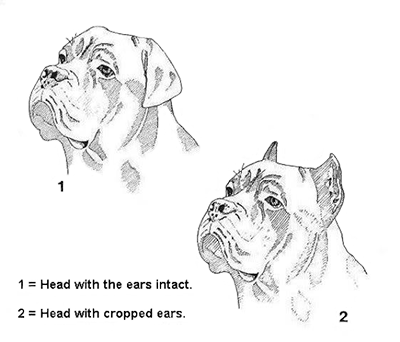
At one time, there were good reasons to further modify dogs surgically. That is, to do things to them that could not be done genetically. At least, not without losing other, desirable features. To minimize the copious amounts of blood that seemed to flow when a tail or ear was lacerated, breeders of dogs fighting wild game trimmed off as much as possible and as early as they could. Later, when some of these breeds became used for more purposes, ear and tail “trimming” (partial removal) was still done because it catered for so long.
Houlton (2008) found for English springer and cocker spaniels that there was a strong association between tail injuries and being undocked. Furthermore, that study suggests that dogs with docked tails were less likely to sustain a tail injury.
Yilmaz (2008) indicated that the function of the auricle is to prevent eardrum from dust, soil, garbage, dirt-like extraneous substances, fly and mosquito-like insects, wind, snow and rainfall-like natural events and also indicated that the most commonly ear cropped Turkish Kangal Shepherd dogs performed their tasks quite well.
Pain: Docking is nearly a completely painless operation. A quick snip, a momentary sharp discomfort that the pup immediately forgets about. One hundred veterinarians and 100 breeders of traditionally docked dogs from Queensland were surveyed by telephone to determine their attitudes towards tail docking. Eighty-four percent of the breeders surveyed were in favour of docking, whereas 83{190157c9d3291b05c36ffbf5b107ec8df92d3dae0a27e0722094a7e67eb30685} of veterinarians were opposed to the practice. Most pups were docked between 1 and 3 days of age. Veterinarians that do not attend to such young puppies 24 hours a day like a breeder does.
But where is the idea of pain coming from? Several studies showed that tail docking causes acute pain and distress in lambs, piglets and calves (Lester et al. 1991; Molony & Kent 1993; Lester et al. 1996).
Dogs and lambs are two different animal species in terms of neurological development and pain sensitivity at certain ages. Dogs, like most carnivores, are born in a much less-developed state than are most herbivores. Whereas a 3 to 5 days old lamb exhibits a well-developed nervous system and complex behavioural repertoire, young pups of the same age have few fully functional sensory organs and exhibit very few behaviours (Bennett & Perini 2003a).
Dogs are typically docked between 3 and 5 days of age, whereas lambs are sometimes docked much later ages.
Nociceptive cells are mature at birth, but the inhibitory pathway, which is critical in modulating pain and reflex activity to pain and distress is still undeveloped until at least ten days after birth. (Dincer et al. 2011)
The Rottweiler by Adolf Pienkoss (3rd Edition) stated: Dog can move better due to a better balance;
That is pure fiction. The misconception comes from seeing a dog hold its tail in a certain way when he turns quickly or does something else, but this is only a RESULT, not an AID or necessity in balance. Docked dogs and naturally tailless breeds such as Corgis and Australian Shepherds do just as well as dogs with tails. Also, only one study with 7 (yes, seven) dogs using camera and electro myographic imaging confirmed that tail movements were important in maintaining body balance during locomotion (Wada et al. 1993)
Let´s talk about the ability to communicate. Animal rights activists often claim, that surgically errected ears and shortened tails take away a part of expression. Far more is obvious from a stiff-legged stance & gait, neck-and-head carriage, ear set, eyes and mouth, all of which combined gives us a picture of “expression.”
A study (caried out with 468 dogs and robot model dogs) showed that larger dogs were less cautious and more likely to approach a long/wagging tail rather than a long/still tail, but did not differ in their approach to a short/still and a short/wagging tail.
Cropping and docking is still a matter of individual choice and custom in most oft he United States, the land of stubbornly independent and free people, where government intrusion into private lives has still been kept in check to a greater degree than in many other places. There is far more of that interference in Europe, where most breeds originated. After carefully reading through meta studies and endless scientific papers and discussing matters with experienced breeders that actually do have hands on experiences instead of „hear-say knowledge“ from a long time ago, we decided that we go with the originally and traditionally look of the Cane Corso.
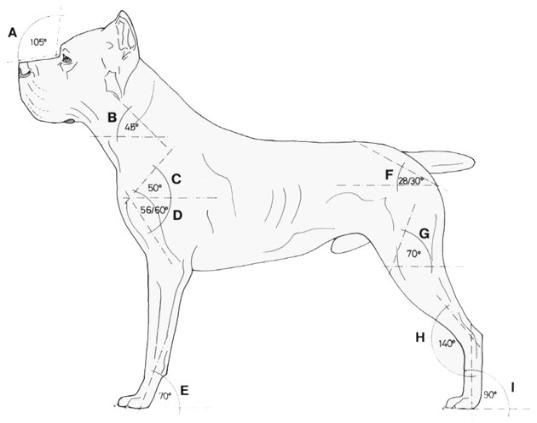
One of them is Jeneviere Brunetti, which put together her thoughts as following and allowed me to quote her:
„There’s a great deal of blatant misinformation and incorrect assumptions regarding ear cropping in dogs. And unfortunately, these ignorant and highly biased opinionss are being spread by the emotion driven public and pressured against animal professionals.
Dropped ears are not natural. They are a direct result of human influence and intervention of selective breeding. This selective breeding was designed to meet appearance and type. As such, dropped ears are not functional nor beneficial to a dog. You don’t see them in nature or any other species. To explain simply, dog breeds and their physical characteristics are not a product of evolution/natural selection. They are a product of man. And man did not create them with adaptive and self regulating qualities. Your dog is a GMO.
„How?!“, you may ask? Well, let’s focus on a lesson in canine genetics. Dropped ears are a mutation that arose when people started selectively inbreeding dogs for temperament and looks. Many of the genes or regulatory elements involved in generating morphological traits during canine fetal development have a particular feature; They carry what are called tandem-repeat sequences. These repeats are far, far more present in canines than other animals. When these regions are copied in the germ line, the copying enzymes tend to get confused and synthesize with too few or too many repeats, creating “slippage mutations”. So, because of these random repeats we see drastic changes in dog’s physical size, shape, color, and behavior. And these changes can be highly evolvable and exorbitant from generation to generation. When people first began inbreeding dogs to pass on certain traits, this greatly increased the already intense tandem repeats in the genome. And so extreme mutations such as dropped ears, curly tails, spotted coats, etc. began to quickly present themselves. Early Europeans liked the aesthetics of these mutations, so when they saw the first dropped ears appear for example, they started breeding together only dogs with dropped ears. And that’s how we started getting breeds with dropped ears. With the exception of a handful of breeds, that’s how we have created all of the many different breeds we have today. Ever wonder why there’s such a vast difference from a Chihuahua to a bulldog to a great dane yet they are all the same species? This is how.
Dropped ears do not allow air flow to the ear canal. They are highly prone to mites, bacterial or fungal infections, and hematomas. They are also more prone to becoming damaged in dogs that are utilized in work (herding, hunting, retrieving, etc). In the working dog, a dropped ear is asking to be bitten, stepped on, or caught on something sharp in the environment. This can lead to repeated torn cartilage and nerve damage. Furthermore, because of gravity, dropped ears can bleed excessively when damaged. All of these situations are commonly chronic, cause prolonged pain and even deafness for the dog, and can be very costly in repeated vet bills.
Dogs with erect ears experience far less infections and damage. Their ear cartilage is stronger and they receive adequate air flow to the canal.
Cropping a dog’s ears is a preventative surgery. It’s aimed to correct the unnatural trait humans have caused to dog breeds. Allow me to rephrase that. It is FIXING what WE humans have CREATED.
The surgery itself is done under anesthesia (like any other surgery), is performed by a licensed vet, is extremely non invasive, and only takes around 10 minutes. When the surgery is performed before 12 weeks of age, the dog feels very little afterwards. This is due to the cartilage and nerves not being established at this time. This makes the healing process quick and relatively painless. Compare that to spaying/neutering a dog which is extremely invasive, highly controversial amongst veterinarians, and potentially detrimental to healthy development.
Furthermore, cropping does not prevent the dog from expressing itself (unless it’s a battle crop). They can still move their ears perfectly fine. In fact, because the cartilage is established and strengthened from being held up, they can move them *better* than dogs with dropped ears . They don’t experience any kind of ear pain. They don’t encounter any hinderance to their communication. This idea of inability to convey emotion is absolute nonesense.
The entire idea that cropping is „barbaric“ is something established by animal rights activists (like PETA) and pencil pushers. The reason why it’s outlawed in a select few other countries is because many people were performing the procedure in their backyard with a pair of scissors or an ax. Like anything related to pet health, not utilizing a licensed vet is highly dangerous and damaging. The fact that idiot people attempt this doesn’t make the procedure itself bad. When cropping is performed correctly, it’s highly auspicious. The fact that ignorant fanatics push these ill informed ideas is even more damming to public knowledge. These people value anthropomorphizing animals over using logic. Their opinions are based on emotion, not formal education in biology, behavior, or veterinary science.“
Another great source is Laura Essenmacher and it can be found here
It was our personal decision to settle for the puppy that matches our family and expactations in close collaboration with our awesome breeder that made a tremendous job in raising the litter and evaluate each offspring. Other countries dont cater to animal right weirdos who are working for ending responsible breeding anyway. Cane Corso are docked very young without any issues – you cannot choose your dog for the next decade (and hopefully longer) at such a young age. We are fully aware that we will face harrassment by uneducated people and that championing out Lewiatan will bring us abroad – but this is our dedication for our breed.
Breeder-judge Fred Lanting warned in December 2011: „We should keep the HSUS and PeTa types of monsters out of our hobbies, homes, and kennels. That will not be easy, as opponents of breed-specific legislation have found: you stomp out one little fire someplace, and half a dozen are lit in other communities where some idiot racist politician thinks that one breed is automatically inferior and should be eliminated.“
And last but not least we shall not forget that The World Small Animal Veterinary Association (2001), The American Veterinary Medical Association (2005), Canadian Veterinary Medical Association (2005) all carried out studies along with their condemning opinion. Opiniated studies rather then scientific – yet they all spay/neuter in the blink of an eye and remove important hormonal systems. And for now really the last scientific finding: A study showing an implicit measure of awareness (’nature vs nurture task‘), found that the majority of participants believed short tails and erect ears were a consequence of genetics rather than something the owner or breeder had done.
So the campaigning against our traditions can be openly called what it is: a well delivered PR thing. Unfortunately, however, there has been limited transfer of this knowledge to people interested in the issue. In my review some of the main arguments for and against canine tail docking and ear cropping are presented and evaluated.
If you made it to this line: thank you for reading!
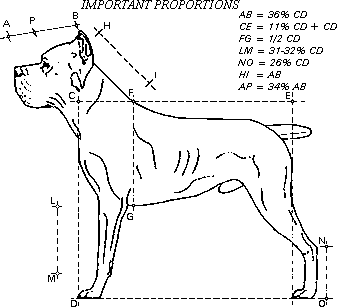
Some more resources with valid information:
http://www.thedogplace.org/ShowPlace/Can-you-exhibit-cropped-cocker-spaniel-J.Byer-16101.asp
http://www.thedogplace.org/ShowPlace/Cropping-Docking-Debate_Shivley-149.asp
http://www.thedogplace.org/Breeds/Rottweiler/Tail-Docking_Wade-124.asp
http://www.thedogplace.org/Videos/Cropping-Ears-Docking-Tails-15803.asp
https://www.cdb.org./index.htm
A wonderful picture of what we´ve lost, so much have changed for the wrong reasons 🙁

https://www.facebook.com/PreservingourPurebreddogs/
How utterly senseless to think that docking a tail or cropping ears is cruelty compared to the pain and irrevocable damage to the hormone and immune system caused by cutting out a dog’s uterus or testicles!
About The Author

LewisMom
Lewiatan - born in the USA and raised in Bavaria - I am the one behind our adventure.